PS5 hands-on controls at a glance
PlayStation's official hands-on report documents the controls below for its PS5 demo session. They are useful as a concrete reference, but they are not a universal promise for Xbox, keyboard and mouse, or a customized layout. Always follow the prompts shown by the build and platform you are actually playing.
The mapping also shows why the techniques should not be collapsed into one generic block. Parry and Deflect use related defensive inputs but serve different state changes, while Issen depends on a precisely timed attack. Learn the purpose first, then let the on-screen tutorial confirm the current input.
- Square — light attack in the documented PS5 hands-on build.
- Triangle — heavy attack in the documented PS5 hands-on build.
- Timed L1 — Parry; L1 plus X — Deflect.
- Attack timed at the incoming hit — Issen.
- R1 — Oni Armament; Circle — dodge in the documented PS5 hands-on build.
Start with attack recognition
All three techniques become easier to understand when tied to a visible cue. Choose one enemy attack in the demo and watch the movement that precedes contact. Do not try to derive an exact frame count from a few attempts. Your first objective is simply to identify when the attack begins, how it approaches Musashi, and which moment you are using to respond.
Keep the test stable. If you switch enemies, distance, technique, and timing after every miss, the outcome provides little diagnostic information. Repeat the same situation and adjust one variable. This deliberate practice method is guidance rather than an official requirement, but it respects the verified fact that timing and defensive choice matter.
Use the input shown by the current demo or game. Platform controls and custom layouts can differ, so a universal button promise would make the guide less accurate. The concepts below describe what the techniques accomplish, while the running software remains the authority for how the player invokes them.
Use Parry to create an answer
Parry is a defensive response that can create a counter opportunity. Practice it first against a clear attack because its result is easier to evaluate when the cue is familiar. After a success, observe the opponent before following up. The useful information is whether an opening exists, not whether you can force a memorized sequence into every exchange.
A Parry should not be described as identical to Deflect merely because both involve timing an incoming attack. The official combat descriptions give the techniques distinct roles. Keeping the terms precise helps a player choose an action for the desired state instead of treating every success as a generic perfect block.
This guide does not publish a Parry frame window, guaranteed invulnerability, damage bonus, or exhaustive compatibility list. The checked sources do not contain those measurements. If future testing supplies reproducible data, it should identify version, platform, method, and sample rather than present one impression as a universal rule.
Use Deflect to pressure stamina
Deflect is connected to enemy stamina pressure. Watch the relevant display before and after a successful response to understand the difference from Parry. Its value is not only the immediate visual clash; it can contribute to changing the opponent's ability to maintain the exchange and help create an opening.
Practice against the same recognizable attack used for Parry. This comparison isolates technique purpose more clearly than using a different enemy for each test. If the attempt misses, adjust timing in a controlled way. If it succeeds, evaluate stamina and opponent state before deciding whether offense is safe.
Do not infer a fixed number of Deflects for every opponent. Enemy stamina, attack behavior, and later-game conditions may differ, and no complete numerical table exists in the cited sources. The verified principle is pressure on stamina; the exact live state must guide the next decision.
Use Issen as a precise counter
Issen offers a powerful counter for precise timing. That payoff makes it tempting to attempt constantly, but learning improves when the chosen target attack is already readable. State the cue you intend to use, make the attempt, and classify a miss as early, late, or based on a mistaken cue. This produces actionable feedback rather than random repetition.
The risk and reward distinguish Issen from the safer learning objective of merely surviving an attack. It is not necessary to force Issen in every exchange. Returning to Parry or Deflect while gathering information can be the better decision. The official sources establish the technique, not a rule that it dominates every matchup.
No exact damage multiplier, timing window, enemy exception list, or tier placement is claimed here. Those would require measured evidence from an identified build. The demo is appropriate for learning the visible and practical distinction, but it should not be mined for false precision.
Understand Issen Break and openings
Issen Break is another verified name in the combat system and is associated with exploiting an opening. That connects it naturally to the stamina-pressure loop: successful defense can change enemy state, a break can create vulnerability, and offense can capitalize. Follow the on-screen teaching for the exact condition and input rather than relying on an invented universal recipe.
Keep the conceptual distinction visible. Standard Issen centers on a precisely timed counter, while Issen Break belongs to an opening created in the exchange. This guide does not claim that the techniques share timing, damage, or eligibility against every enemy. It only organizes the roles documented in official combat coverage.
When practicing, confirm that an opening actually exists before attempting the associated response. If the state is unclear, repeat the Deflect and stamina observation. A reliable causal sequence is more useful than memorizing a name without understanding what enabled it.
Run a controlled comparison in the demo
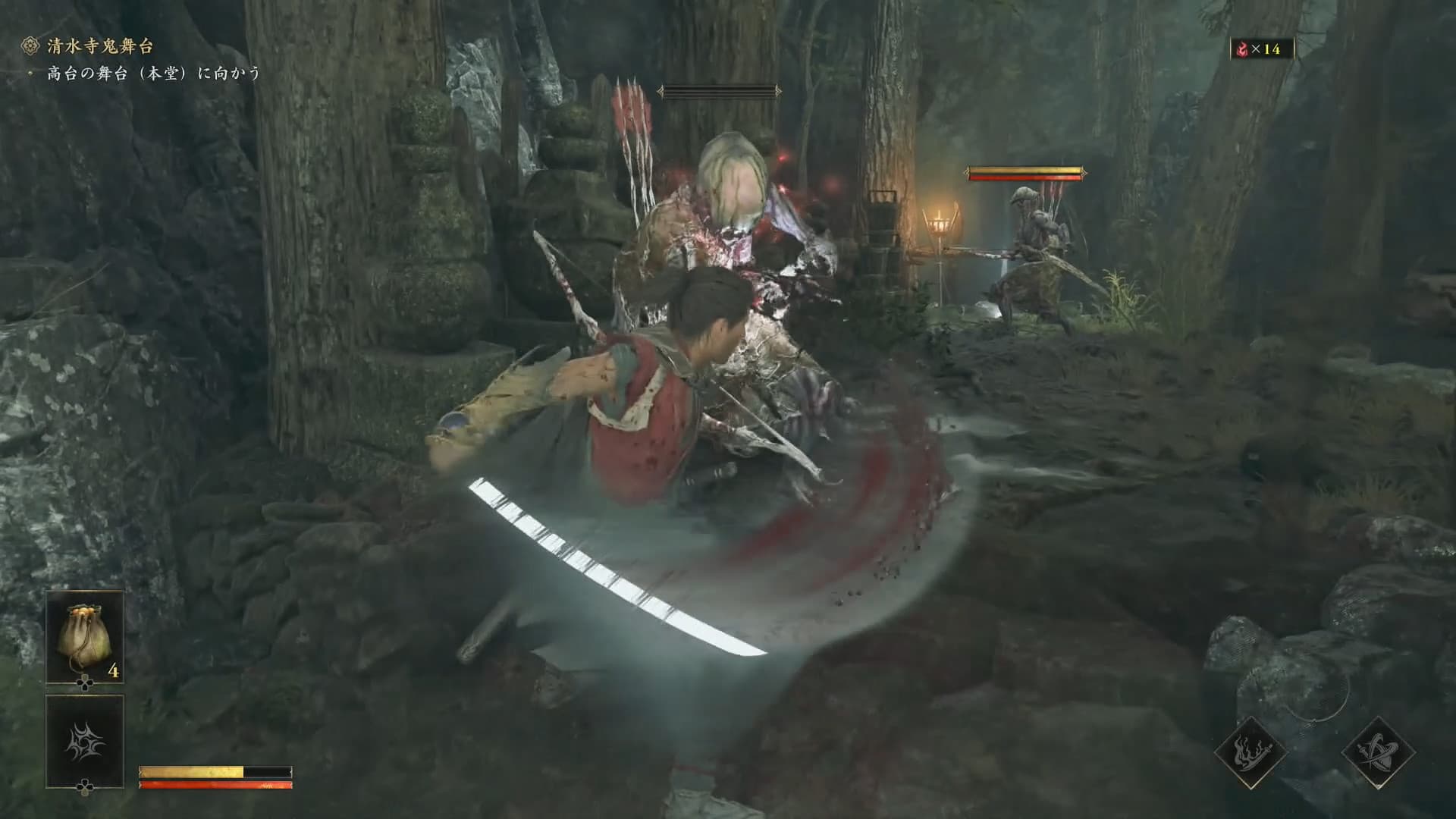
Begin with one readable Genma attack at Kiyomizu-dera. On the first set of attempts, practice Parry and observe the counter opportunity. On the second set, practice Deflect and watch stamina. On the third, attempt Issen against the same cue. Keeping the stimulus similar makes the different outcomes easier to compare.
Then carry the distinctions into the Sasaki Ganryu encounter. Spend an early exchange observing rather than chasing a perfect result. Choose the technique that matches the state you can read, reassess after success, and use Oni Armament separately when absorbed souls make it available. The boss is a confirmed demo endpoint, but no fabricated move script is necessary for a useful lesson.
Record conclusions in plain language: which cue was readable, which response created an opportunity, whether Deflect changed stamina, and whether Issen timing was consistent. Do not convert a handful of attempts into frame data or a final launch balance claim. Replay with one focus if necessary; demo story progress will not transfer, but keeping the save unlocks the Kubi Akari charm.
This page distinguishes verified facts from details that Capcom has not yet announced. Source checks are dated so launch information can be reviewed when official listings change.