Official footage
See the verified material
These official previews are included as visual context. Press play to load the privacy-enhanced player.
The confirmed early Edo-era setting
Capcom explicitly places Onimusha: Way of the Sword in early Edo-era Kyoto. That period label gives the game a historical frame, while Musashi, the Genma, the Oni Gauntlet, and Malice make its story openly supernatural. A setting summary should preserve both halves rather than presenting the game as either a documentary reconstruction or a context-free fantasy city.
The official title is a single-player Swordplay Action game, so Kyoto is also a playable combat setting. Its temples, paths, interiors, and transformed spaces provide the places where Musashi confronts enemies and uses the Gauntlet. Official media can establish the look of those scenes, but it does not reveal every route or prove seamless travel between all visible landmarks.
Historical dates, architecture, and geography beyond the publisher's statements need separate sourcing if they are ever added. Even a real landmark may be rearranged for play, story, or visual composition. This wiki identifies the game's setting and confirmed names without claiming that its map can be used as a historical or modern guide to Kyoto.
How Malice transforms Kyoto
Malice is the named supernatural force or condition twisting the capital in current descriptions. It helps explain the dark, distorted Kyoto shown in official media and accompanies the Genma threat facing Musashi. That connection is verified at the premise level; the checked sources do not document the complete origin, rules, or resolution of Malice.
The word should not be converted into an unsupported gameplay meter, elemental damage type, or collectible. A visual corruption can shape environments without functioning as a player statistic. Any mechanical interactions should be documented with the relevant scene, tutorial, or official explanation rather than inferred from atmosphere.
Malice also means that visual deviations from real locations may be intentional fiction. A warped structure, impossible growth, or supernatural sky does not necessarily represent a research error. The game is presenting a capital under otherworldly pressure, and the wiki should distinguish that artistic premise from claims about how the historical landmark actually appeared.
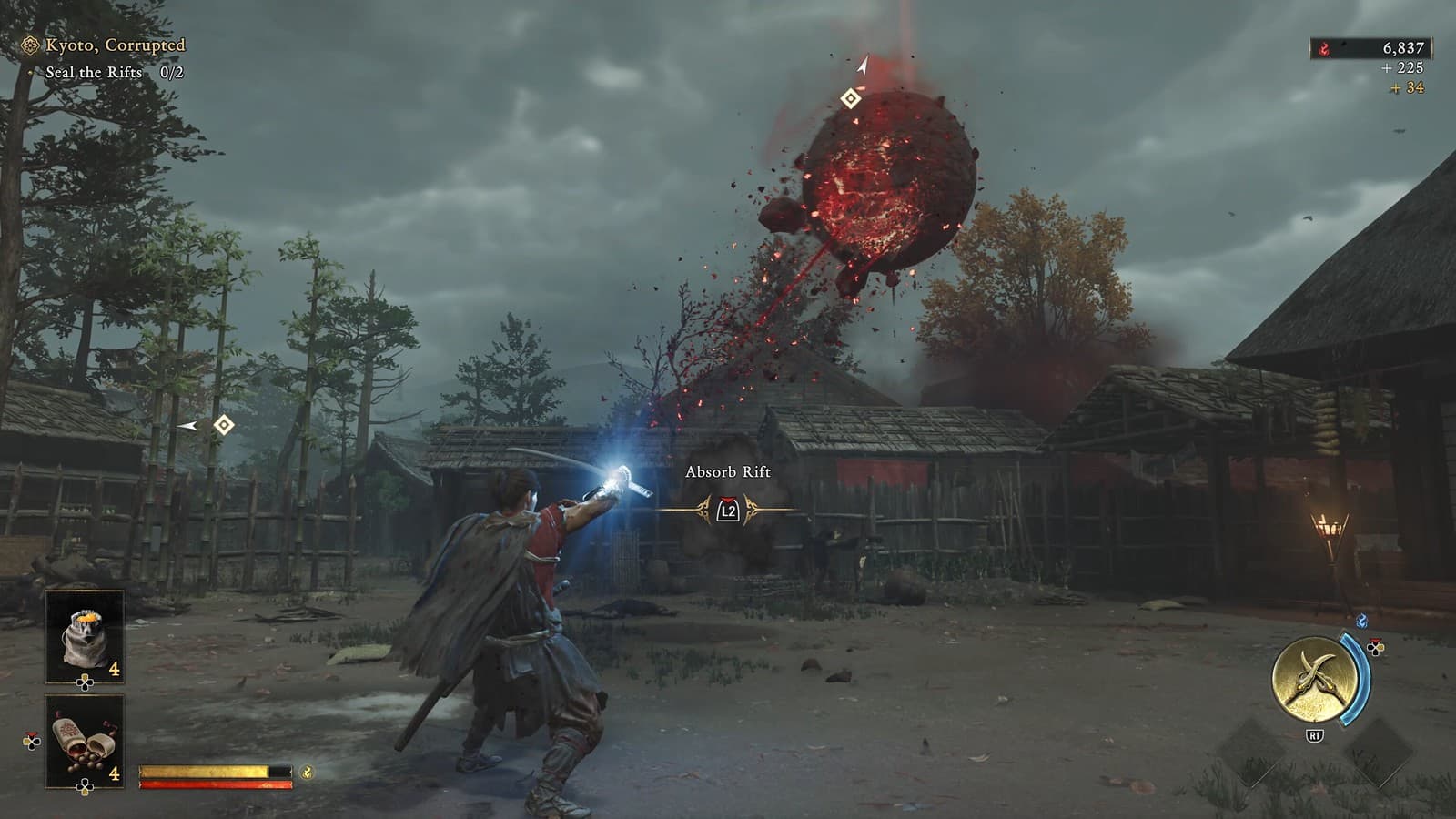
Kiyomizu-dera in the official demo
Kiyomizu-dera is the clearest named playable demo location because official material identifies it directly. The demo covers about thirty minutes of the early story and uses the area to introduce Musashi's swordplay, Oni power, and conflict. It eventually leads to an encounter involving Sasaki Ganryu, giving the location both tutorial and narrative weight.
This confirmed slice does not establish the size of Kiyomizu-dera in the full campaign or whether every demo path matches the current full-game version. Demo progress does not carry over, although keeping the save data unlocks the Kubi Akari charm in the full game. Those rules make the demo a practice experience rather than a permanent start to a campaign save.
A walkthrough can describe the verified demo route, but it should identify platform and version and avoid projecting beyond its endpoint. Locked doors, distant structures, or background paths are not proof of later accessible areas. The safe conclusion is that Kiyomizu-dera is a confirmed stage or area and an early showcase for combat and setting.
Oni Refuge and the base at Rokudo Chinno-ji
The final preview follows Musashi from the demo confrontation into the Oni Refuge, establishing that the campaign continues beyond the contained Kiyomizu-dera slice. The Refuge is a confirmed place in the story, but the preview does not publish every path, interaction, or return condition. It should be described as a revealed area rather than expanded into an invented walkthrough.
Rokudo Chinno-ji is presented as a base of operations. From there, Musashi can prepare before entering a larger Kyoto space through supernatural rifts. A base plus an explorable area gives the campaign more structure than a simple chain of isolated arenas, yet the source does not say every location is continuously connected or available from the beginning.
Treasures and absorbed souls in the wider journey are connected to equipment upgrades and ability unlocks. That gives exploration a verified purpose. The preview still does not provide a full collectible map, upgrade cost table, or fastest route, so exact route guides require reproducible current-build play before turning those broad objectives into directions.
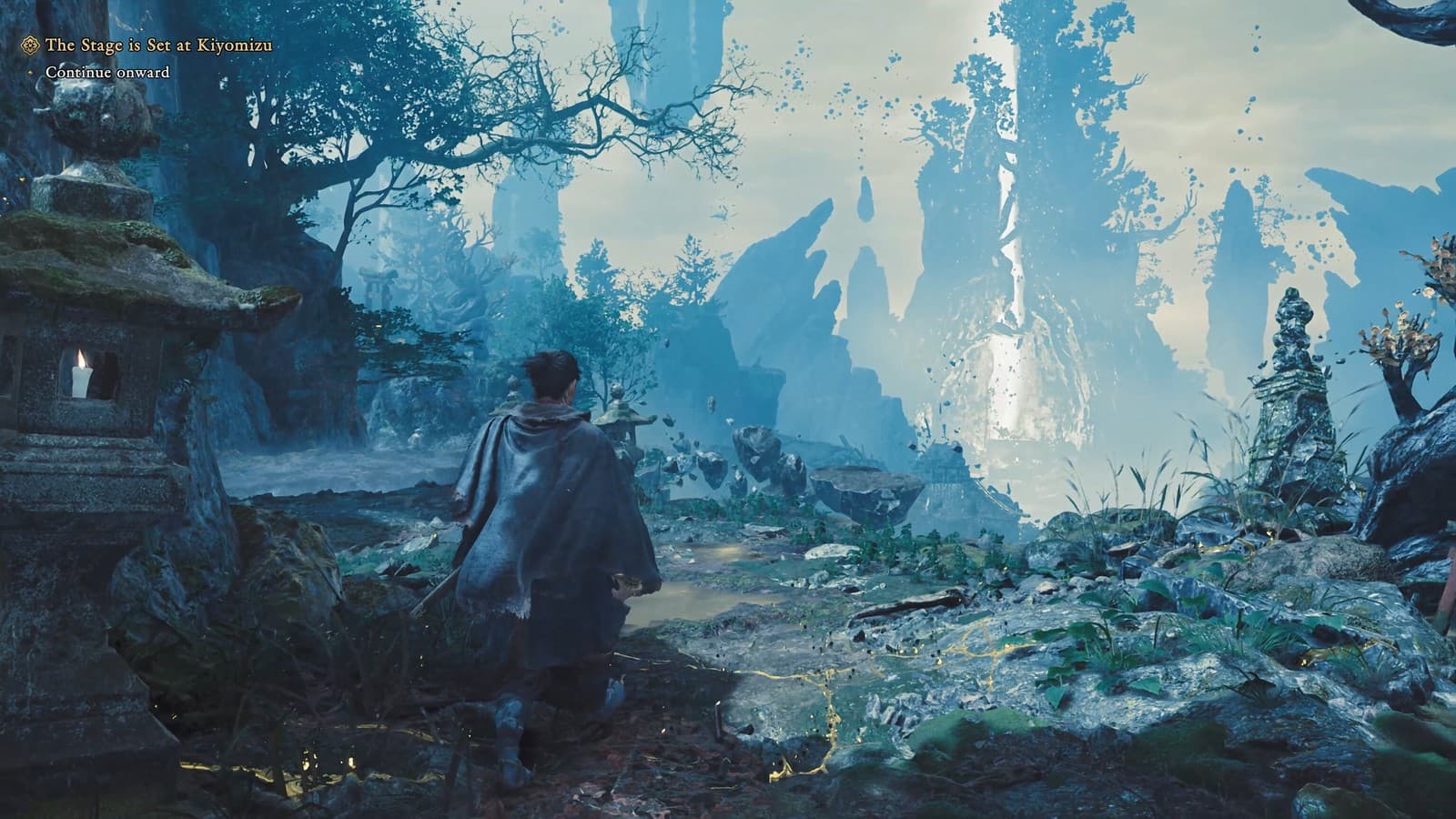
Why larger Kyoto is not confirmed open world
The August preview describes tighter missions flowing into a much larger Kyoto area. It also says toxic fog and demonic barriers limit where Musashi can go. Closing Genma rifts and completing objectives clears parts of the city, while abilities such as Oni Strength can remove certain obstacles. Exploration therefore expands through progress rather than beginning as unrestricted travel.
That structure can feel open in moments without meeting every player's definition of an open world. The official material does not use that label, confirm seamless access to all districts, or publish a complete map. The accurate answer is larger, bounded exploration inside the campaign, with supernatural limits that recede as objectives and abilities open more space.
Environmental puzzles and traps are also confirmed in the preview, including uses for the Oni Bow. Those interactions show that Kyoto supports more than combat corridors. They still do not prove that every visible street or landmark is accessible. Current mapping should record direct routes, gates, optional spaces, and return points from the released build instead of inferring them from promotional camera angles.
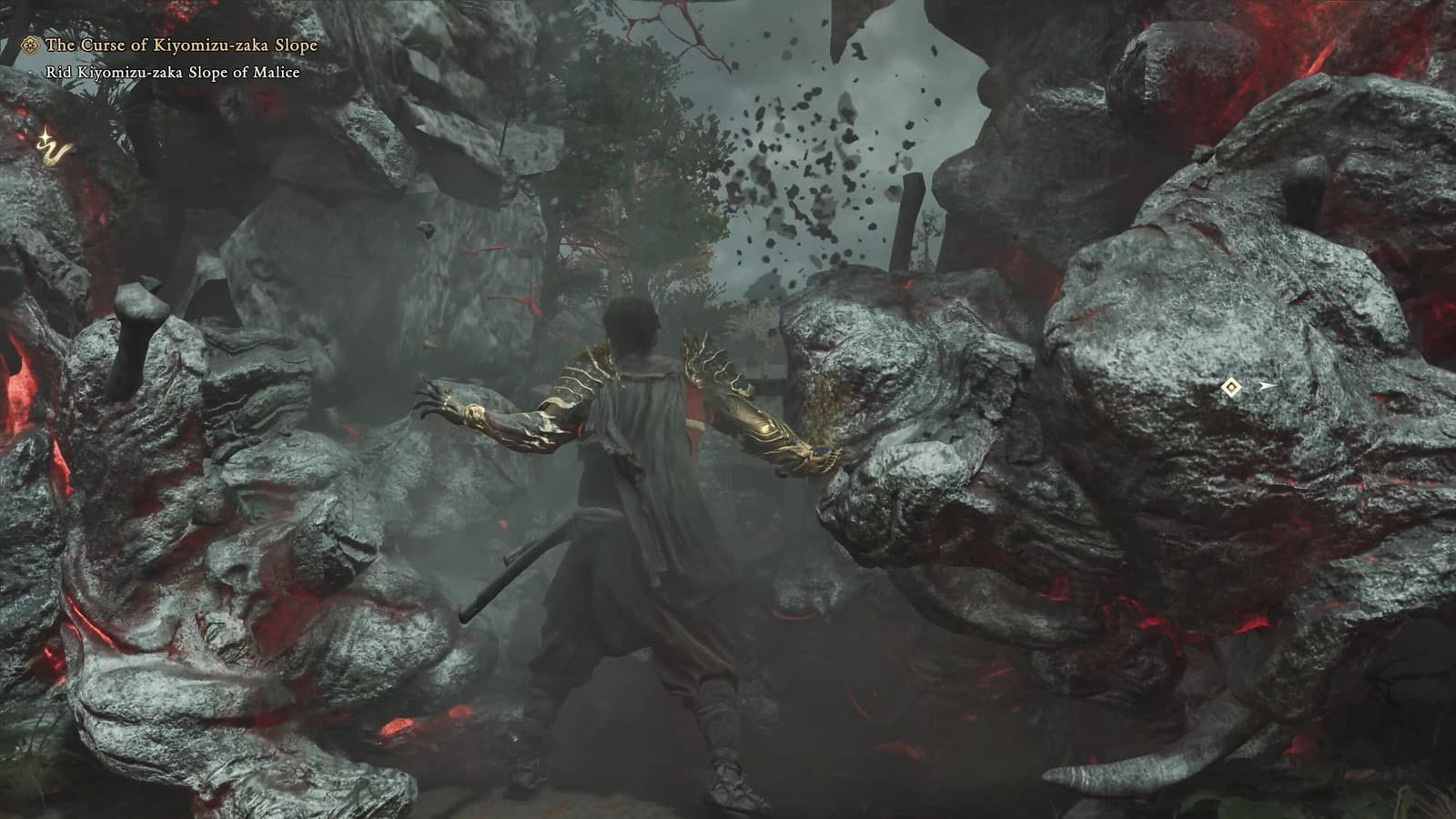
Historical place, fictional Onimusha story
Kyoto, Kiyomizu-dera, Mount Oe, and Miyamoto Musashi have real historical or geographic associations, but the game combines them with Genma, Malice, and the Oni Gauntlet. The result is Capcom's fictional action narrative. Historical context can enrich a guide only when it is sourced and visibly separated from statements about the game's canon.
Avoid mechanical localization of names. If a future language edition uses an official localized place or game title, use the publisher's version and cite it. The English site should retain spellings found in its checked English sources. Search-friendly alternate spellings can be mentioned carefully, but should not replace official names or create duplicate pages.
This setting page can expand with a verified area sequence, reciprocal links to walkthroughs, and spoiler controls. Its evidence-led core is that missions lead into a larger but bounded early Edo-era Kyoto, with Kiyomizu-dera, the Oni Refuge, Rokudo Chinno-ji, and Mount Oe among the confirmed geography. A complete map should be added only from reproducible evidence in the current build.
This page distinguishes verified facts from details that Capcom has not yet announced. Source checks are dated so launch information can be reviewed when official listings change.